Introduction
In the dairy industries maintaining a clean hygienic and Odour free environment is critical not only for regulatory compliance but also for employee health and brand image. From milk pasteurization to ghee carification, each stage in dairy processing can emit various smell that, if left unchecked can cause discomfort , environmental concerns and even neighbour complaints. This blog guides you to explore the cause of odour in dairy, milk and ghee processing plants and effective strategies to control and eliminate them.
Why Odour Control Matters in Dairy Plants
Dairy processing involves the handling of large amounts of organic materials such as raw milk, cream, curd and butter, which are subjected to spoilage and fermentation. If not managed properly, the by-products of these processes can lead to the release of unpleasant smells. Here’s why odour control should be a top priority:
- Compliance with Environmental Norms: Pollution control boards across many countries mandate odour management as part of environmental compliance.
- Community Relations: Plants located near residential areas need to ensure they do not disrupt the local environment.
- Employee Health and Morale: Persistent foul odours can reduce workplace satisfaction and may even lead to health complaints.
- Brand Reputation: An unpleasant smell near your processing unit can negatively impact your brand image and consumer trust.
What Causes Foul Smell in Dairy and Ghee Factories?
Understanding the sources of odour helps in deploying targeted solutions. Some of the most common odour sources in a dairy or ghee processing facility include:
1. Raw Milk Storage
Psychrophilic (bacteria with optimal growth rate below 15°C) and Mesophilic (bacteria with optimal growth rate between 20-40°C) bacterial growth can make the milk processing plant smell awful. This happens, If the milk is stored for extended periods at improper temperatures, it can ferment and can produce sour or putrid odours.
2. Pasteurization and Heating Processes
The heating of milk and cream releases volatile organic compounds (VOCs) that contribute to strong smells, especially during ghee production. Also improper processing like Overheating butter during clarification can cause burnt odours, while incomplete removal of milk solids can lead to spoilage-related smells.
3. Whey and Sludge Disposal
Whey, a by-product of curd and cheese making, contains organic matter that decomposes quickly. Improper disposal leads to foul smells.
4. Spillage and Floor Cleaning
Milk spills or leftover residue on floors can rot and produce odour if not cleaned thoroughly.
5. Wastewater Treatment
Effluents containing milk solids, fats, and detergents from cleaning-in-place (CIP) systems can create anaerobic conditions, emitting hydrogen sulfide and other gases.
Effective Odour Control Strategies
Managing odour in dairy processing plants requires a multi-pronged approach combining engineering, chemical, and biological controls. Here are some proven strategies:
1. Proper Housekeeping and Hygiene Practices
- Regular cleaning schedules
- Immediate cleanup of spills
- Use of cleaning agents
2. Ventilation and Air Filtration
- Air quality management is critical to prevent airborne contamination. High-efficiency particulate air (HEPA) filters, with 99.97% efficiency for 0.3-micron particles, can remove microbial contaminants
- Installing air curtains in high-odour zones
- Installation of exhaust fans to ensure air circulation
3. Enclosed Processing Units
Whenever possible, ensure that odour-generating processes like ghee clarification or cheese ripening are enclosed and equipped with fume extraction systems. Also its always better to use the enclosed crate washing units and so on to avoid the spillage milk speading all over and acting as a fugitive source of odour.
4. Biological Treatment Systems
These eco-friendly systems use microbial activity to neutralize odours.
✅ Biofilters (Cocofil™ or Organic Media)
A mixture of coconut husk, compost, and soil traps and degrades VOCs biologically. These are perfect for continuous, low-concentration odour sources.
✅ Bioscrubbers
In this setup, odourous air is washed with water in a tower where bacteria are suspended. The scrubbing media absorbs odourous gas, and which is later transferred to an aeration-based treatment unit. At this aeration tank the microbes digest compounds like H₂S and ammonia and making it odourless compounds. This liquor is later circulated again in the absorption/scrubbing column to as a continuous system.
✅ Biotrickling Filter
In this setup, odourous air is passed through a column where the microbes are attached on a packing medium like in the trickling filter. Unlike trickling filter, which is used for wastewater treatment, here the case of biotrickling filter, air is being treated. Similar to that in the scrubber, the mass transfer of odourous2 compounds first happens from waste gas to the liquid that is being trickled over the media containing bacteria. Then the compounds gets taken up by the bacteria from the liquid and neutralize them.
All the above systems are low-maintenance, energy-efficient, and are highly effective for odour control.
5. Chemical Scrubbers
Ideal for point-source odours with high gas concentrations. Here, odourous air is passed through a packed column or spray scrubbers where it reacts with acid/alkali solutions.
✅ Acid Scrubbers
Used for ammonia control (uses acidic solution as scrubbing liquid)
✅ Alkaline Scrubbers
Used for hydrogen sulfide and other acid gas control (alkaline solutions are used as scrubbing liquid).
Always include mist eliminators to prevent chemical carryover.
6. Activated Carbon Filters
These are compact, plug-and-play systems that adsorb odourous gases using porous carbon media. Suitable for:
- Packaging rooms
- Ghee storage areas
- Smaller plants or urban units
They offer high removal efficiency and minimal maintenance, making them a popular choice.
7. Composting and Sludge Management
Instead of letting organic waste rot in open containers, convert it into compost or manage it through covered anaerobic digestion tanks.
8. Odour Mapping and Monitoring
Managing odour effectively starts with knowing when, where, and how it’s being released. One of the smartest ways to do this is by using real-time odour mapping and monitoring with advanced sensor technology.
By placing sensors and data loggers in key areas around the facility, plant operators can keep an eye on odour levels, spot unusual changes, and identify problem spots quickly. This steady flow of data helps teams take action early—before odour becomes a regulatory issue or leads to complaints from the community.
How Oizom Helps with Odour Monitoring
Oizom (www.oizom.com), a leader in environmental monitoring, provides innovative tools like Polludrone and Odosense to tackle odour challenges. These smart, IoT-enabled devices are designed to accurately detect a variety of odourous gases, including hydrogen sulfide (H₂S), ammonia (NH₃), methane (CH₄), and VOCs, giving operators the insights they need to stay ahead of potential problems.
Environmental and Legal Compliance
In India and many other countries, dairy processing units—including those producing milk, curd, butter, and ghee—must adhere to stringent odour emission norms laid out by their respective Pollution Control Boards. The Central Pollution Control Board (CPCB) and State Pollution Control Boards (SPCBs) have specific environmental guidelines aimed at minimizing nuisance odours that can affect local communities. To stay on the right side of regulations, facilities need to run regular environmental audits, keep current records of their emissions and cleanup efforts, and work with certified experts in odour control. Why go through all that? Because staying compliant doesn’t just help avoid fines or legal trouble—it also builds public trust and shows that the company genuinely cares about the environment.
What Can Elixir Enviro Systems Do for Odour Control in Dairy Plants?
Elixir Enviro Systems is a leading name and pioneer in India in industrial odour control, providing end-to-end solutions that help dairy processing units stay compliant, efficient, and community-friendly. With extensive experience in managing odour emissions across diverse industries, Elixir offers specialized services tailored for dairies, milk processing units, and ghee manufacturing plants, where organic waste, fermentation processes, and effluent treatment systems often result in strong and persistent odours.
Our offerings include:
- Odour Assessments & Dispersion Modelling – Site-specific odour studies using advanced modelling tools to identify emission sources and predict odour spread.
- Custom-Engineered Odour Control Systems – Design and installation of biofilters, chemical scrubbers, and activated carbon units specifically suited to dairy-related emissions.
- Turnkey ETP Upgrades & Sludge Handling – Enhancing existing effluent treatment plants to reduce odour-causing compounds and improve sludge management.
- Layout Optimization & Engineering Support – Smart facility design and airflow optimization to prevent fugitive emissions and reduce odour hotspots.
- Ongoing Monitoring & AMC – Real-time odour monitoring, annual maintenance contracts.
With over 1 million m³/hr of treated air capacity across India, Elixir Enviro Systems is the trusted partner for sustainable, scalable, and proven odour control in the dairy industry.
Conclusion
Odour control in dairy, milk, and ghee processing plants is not a luxury—it’s a necessity. Persistent odours don’t just affect your plant’s environment; they can compromise employee health, community relations, and compliance with environmental regulations. A proactive, well-engineered odour management strategy enhances operational efficiency, reduces legal risk, and strengthens your brand’s reputation.
Elixir Enviro Systems helps dairy processors take odour control from an afterthought to a core operational priority. With industry-specific expertise, cutting-edge technologies, and end-to-end support, we empower your facility to operate cleaner, safer, and more sustainably.
📞 Need help with odour control at your facility?
Partner with Elixir Enviro Systems to implement reliable, compliant, and sustainable odour control solutions tailored to your dairy operations.
👉 Contact us today
📧 Email: info@elixirenviro.in 🌐 Visit:www.elixirenviro.in
FAQs
1. What causes foul odours in dairy and ghee processing plants?
Foul odours can result from the fermentation of spoiled milk (raw material handling), heating of fats (processing), waste accumulation, whey disposal, and inefficient cleaning processes. Also, wastewater treatment plant collection tanks and headworks creates big odour nuisance issues. In many places, the emissions from the spray drying column also creates huge odour nuisance. In short, the odour from dairy can be the following places
- Raw milk storage tanks
- Milk spillage and floor washings
- Ghee clarification and fat separation
- Whey disposal units
- Effluent treatment plant (ETP) including the Sludge handling units
- Storage of expired or rejected dairy products
- Cleaning-In-Place (CIP) system discharges
2. How is odour measured in dairy plants?
Odour perception is subjective but measurable using sensory and instrumental techniques. Commonly detected smells in dairy operations include sour milk, rotten eggs (hydrogen sulphide), rancid butter, and ammonia-like scents. Odour monitoring includes both qualitative and quantitative approaches:
- Sensory methods: Human olfactometry (e.g., dynamic dilution olfactometry)
- Chemical analysis: Gas chromatography-mass spectrometry (GC-MS), H2S meters
- Real-time sensors: Ammonia, VOC, and sulphide detectors
- Odour dispersion modelling: Using tools like AERMOD or CALPUFF to predict impact
3. What are the key odourous compounds in a dairy?
Several key compounds are responsible for malodour in dairy operations:
- Hydrogen sulphide (H₂S): Produced in anaerobic environments
- Volatile fatty acids (VFAs): Resulting from the decomposition of milk solids
- Ammonia (NH₃): Released from protein breakdown and cleaning agents
- Methyl mercaptan and dimethyl sulphide: Emitted from ghee and fat residues
- Skatole and indole: Found in biological waste streams
4. What are operational optimization strategies for odour control in Dairy industries?
Operational changes can significantly reduce odour:
- Preventing anaerobic conditions in wastewater holding tanks
- Immediate treatment of whey and curd waste
- Reducing fat/protein accumulation in drains
- Optimising Clean-in-Place (CIP) systems to avoid residue build-up
- Segregation of high-strength waste streams
5. How to Reduce Odour from Milk and Ghee Manufacturing Units
Use enclosed heating systems, make sure the area is well-ventilated, and use air scrubbers or odour-neutralizing products. Keeping the space clean and removing waste regularly also makes a big difference.
6. Are there eco-friendly solutions for odour control?
Yes, Biofilters, Biotrickling filters, Bioscrubbers and plasma ionization are sustainable, environmentally friendly options that effectively neutralize odours. Generally, the Biological systems such as Biofilter, Biotrickling filters and Bioscrubbers turns out to be the lowest lifetime cost system. Require low energy and offer high removal efficiency for H2S and VOCs
Key considerations:
- Media selection and life span
- Moisture and pH control
- Prevention of clogging and biomass overgrowth
7. What are the best Practices for Dairy Units
- Conduct odour audits and risk assessments regularly
- Install containment and ventilation systems at emission points
- Automate cleaning processes to reduce manual handling and spillage
- Provide odour complaint registers and response protocols
- Use odour control units such as Biofilters or other technologies and maintain them well.
8. What are the challenges in odour control from dairy
- Variability in odour emission sources, this can be easily managed by well-engineered Odour Control Unit (OCU).
- High capital and operational cost for advanced systems; Capital (CAPEX) is a requirement for any OCU to be in place. Operation expense (OPEX) can be minimized by selecting the right technology; for instance the biological system.
- Inconsistent odour perception among stakeholders; to an extent it can be controlled by designing a well designed system wherein the odour perception outside the boundary become next to impossible.
- Lack of trained personnel for system operation. This is true for complex systems like thermal oxidation, cold plasma systems and so on. The biological system, generally require minimal or no requirement of operation personal.
- Integration with legacy plant designs. This is true especially for the plants with minimal land availability. Otherwise, integration of OCU to the plant design in not at all a challenge.
9. Can odour control improve compliance with regulations?
Absolutely. Most environmental boards require odour management plans, and effective odour control helps meet these compliance standards
How to Manage Odour in Pet Food Manufacturing: Proven Technologies & Regulatory Insights
Introduction
The pet food manufacturing industry has grown significantly in recent years, driven by increasing pet ownership and demand for high-quality, specialized pet nutrition. However, one of the persistent challenges in this sector is managing odours generated during production. The processing of animal proteins, fats, and other organic materials creates volatile organic compounds (VOCs), sulfur compounds, and amines, which produce strong, often unpleasant odours. These odours can affect worker safety, community relations, and regulatory compliance. Effective odour control is thus critical for operational success, environmental responsibility, and maintaining a positive public image.
This article explores the sources of odours in pet food manufacturing, their impact, and the technologies and strategies available for effective odour management. It also examines Regulations, industry best practices, and emerging innovations, providing a comprehensive guide for manufacturers seeking to mitigate odour-related challenges.
What Causes Odours in Pet Food Manufacturing?
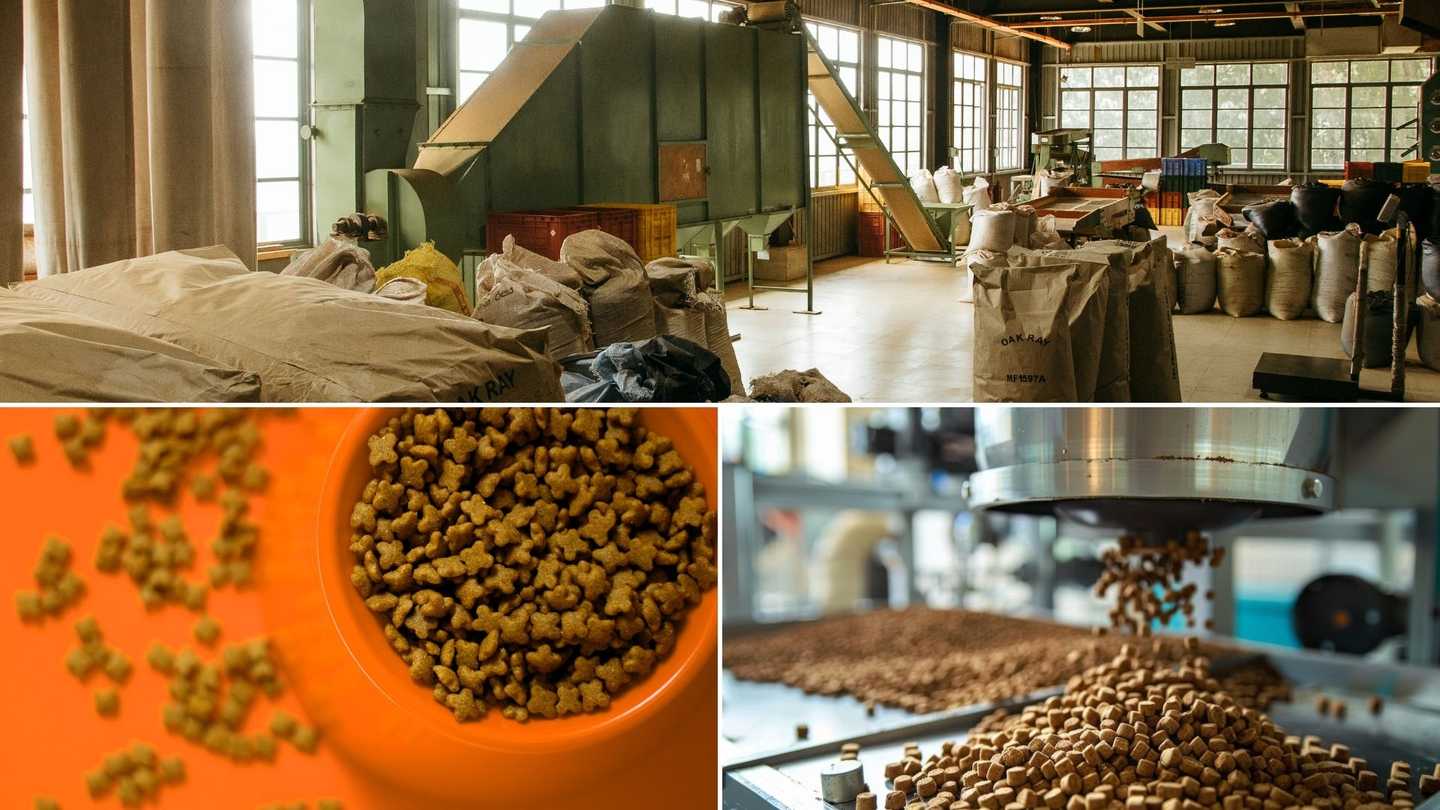
Pet food manufacturing involves several processes that contribute to odour emissions, including raw material handling, cooking, extrusion, drying, and packaging. Understanding these sources is the first step in designing effective control measures.
1. Raw Material Handling
Pet food production often begins with the receipt and storage of raw materials such as meat, fish, poultry by-products, grains, and fats. These materials, particularly animal-based ingredients, can emit odours during unloading, storage, and preprocessing. Decomposition of organic matter, especially if storage conditions are suboptimal, exacerbates the issue.
2. Batching and Grinding
The raw materials or all the ingredients defined based on the formulation of the company, including protein sources such as fishmeal, chicken-meal etc. are grinded along with the other materials. During this time there will be VOC and dust generation, which will be handled in a bag filter. The dust gets trapped in the bag filter but the exhaust air after the bag filter will be having VOCs and that causes odour emission from the process.
3. Cooking
A key process in which animal by-products are cooked at high temperatures (often exceeding 120°C), leading to the release of VOCs, including aldehydes, ketones, and sulfur-containing compounds like hydrogen sulfide (H₂S). These compounds have low odour thresholds, meaning even small concentrations are detectable and potentially offensive.
4. Extrusion and Drying
Extrusion involves mixing, cooking, and shaping pet food under high pressure and temperature. The process releases steam and volatile compounds, contributing to odour emissions. Drying, used to reduce moisture content in kibble or treats, further volatilizes organic compounds, releasing them into the exhaust air.
5. Packaging and Storage
While less intense, odours can also arise during packaging if residual volatile compounds are released from freshly processed products. Improperly sealed storage areas may allow odours to escape into the surrounding environment.
Why Odour Control Matters in the Pet Food Industry
Odour emissions from pet food manufacturing have wide-ranging implications:
- Community Relations: Facilities located near residential areas often face complaints from neighbors about unpleasant smells. Persistent odours can strain relationships with local communities and harm a company’s reputation.
- Regulatory Compliance: Many countries have strict regulations governing odour emissions to protect public health and the environment. Non-compliance can result in fines, operational restrictions, or legal action.
- Worker Health and Safety: Prolonged exposure to odorous compounds, especially those like H₂S, can pose health risks to employees, including respiratory irritation and headaches.
- Environmental Impact: Some odorous compounds contribute to air pollution or greenhouse gas emissions, necessitating control to align with sustainability goals.
Given these impacts, effective odour control is not just a technical necessity but a strategic priority for pet food manufacturers.
Regulations Governing Odour Emissions
Odour regulations vary by region but generally aim to limit nuisance and protect air quality. In the United States, the Environmental Protection Agency (EPA) and state-level agencies enforce standards under the Clean Air Act, which may include limits on VOCs and hazardous air pollutants (HAPs). Facilities must also comply with local zoning laws and nuisance ordinances.
In the European Union, the Industrial Emissions Directive (2010/75/EU) sets guidelines for managing emissions, including odours, from industrial processes. Member states often have additional requirements, such as Germany’s Technical Instructions on Air Quality Control (TA Luft), which specify odour thresholds.
In Australia, the Environmental Protection Authority (EPA) in each state regulates odour emissions, often requiring facilities to conduct odour impact assessments and implement control measures. Similar frameworks exist in Canada, where provincial governments oversee compliance.
Pet food manufacturers must stay informed about applicable regulations and engage with regulatory bodies to ensure compliance. This often involves monitoring emissions, modeling odour dispersion, and reporting to authorities.
Top Odour Control Technologies for Pet Food Manufacturing
A range of technologies is available to control odours in pet food manufacturing, each suited to specific processes and compounds. These can be broadly categorized into physical, chemical, and biological methods, often used in combination for optimal results.
1. Physical Methods
- Ventilation and Containment: Proper ventilation systems capture odorous air at the source, preventing it from escaping into the environment. Capturing Fugitive emissions, especially from the extruder area, Enclosed processing areas and negative pressure systems help contain emissions.
- Adsorption: Activated carbon filters adsorb VOCs and odorous compounds from exhaust streams. These systems are effective for low-concentration odours but require regular replacement of carbon media.
- Thermal Oxidation: Thermal oxidizers and catalytic oxidizers combust VOCs at high temperatures, converting them into carbon dioxide and water. Regenerative thermal oxidizers (RTOs) are energy-efficient options widely used in pet food facilities.
- Condensation: Cooling exhaust gases condenses volatile compounds into liquid form, reducing odour emissions. This method is often used in saturated air treatment. Also used in pet food manufacturing plants having rendering plants for the raw material pre-treatment.
2. Chemical Methods
- Scrubbers: Wet scrubbers use water or chemical solutions (e.g., sodium hydroxide or Acids or chlorine dioxide or combination of other chemicals) to neutralize and remove odorous compounds like H₂S and amines. Packed-bed scrubbers are particularly effective for high-intensity odours.
- Ozonation: Ozone generators oxidize odorous compounds, breaking them down into less offensive molecules. This method is suitable for treating exhaust air but requires careful control to avoid ozone-related health risks and to destruct the unused ozone after the treatment, as ozone has it own distinctive smell and also due to its high Global Warming Potential (GWP).
3. Biological Methods
- Biofilters: Biofilters use microorganisms to degrade odorous compounds in a bed of organic material. They are cost-effective and environmentally friendly, ideal for treating large volumes of low-concentration odours.
- Bioscrubbers: Similar to wet scrubbers, bioscrubbers use a liquid medium containing microorganisms to break down odorous compounds. They are compact and effective for continuous operation.
- Biotrickling Filters: These combine elements of biofilters and bioscrubbers, using a synthetic medium irrigated with water to support microbial activity. They are highly efficient for treating sulfur compounds.
Best Practices for Pet Food Manufacturing Odour Management
Beyond installing control technologies, pet food manufacturers can adopt operational and strategic practices to minimize odours:
1. Process Optimization
- Temperature Control: Lowering cooking temperatures where possible reduces the release of volatile compounds.
- Material Handling: Prompt processing of raw materials and proper storage to avoid decomposition and odour generation.
- Cleaning Protocols: Regular cleaning of equipment and processing areas minimizes residual organic matter that can produce odours.
2. Facility Design
- Enclosed Systems: Designing facilities with enclosed processing units and sealed transfer systems reduces fugitive emissions.
- Stack Height and Placement: Exhaust stacks should be tall enough to disperse odours above ground level and positioned away from residential areas to minimize impact.
- Buffer Zones: Maintaining a distance between facilities and sensitive receptors (e.g., schools, homes) reduces odour complaints.
3. Monitoring and Modeling
- Odour Sampling: Regular sampling and analysis of emissions using olfactometry or gas chromatography identify problem areas and verify control effectiveness.
- Dispersion Modeling: Software tools like AERMOD or CALPUFF predict how odours will spread, helping manufacturers assess their impact on nearby communities.
- Real-Time Sensors: Electronic noses and gas sensors such as Odosnese of Oizom provide continuous monitoring, enabling rapid response to odour spikes.
4. Community Engagement
- Transparency: Communicating with local communities about odour control efforts builds trust and reduces complaints.
- Odour Logs: Encouraging residents to report odour incidents helps manufacturers correlate emissions with weather conditions or operational issues.
- Public Tours: Inviting community members to visit facilities demonstrates commitment to environmental stewardship.
5. Training and Maintenance
- Employee Training: Educating workers on odour control systems and best practices ensure consistent operation and early detection of issues.
- Preventive Maintenance: Regular inspection and servicing of scrubbers, oxidizers, and biofilters prevent malfunctions that could lead to odour releases.
Elixir Enviro Systems – Experts in Pet Food Odour Control
If you’re looking for reliable pet food odour control, Elixir Enviro Systems is your trusted partner. We specialize in industrial odour treatment, wastewater management, and biofiltration systems for factories and processing plants.
With years of experience, Elixir offers complete solutions—from design and installation to testing and maintenance. Whether your facility needs scrubbers, biofilters, RTOs, or real-time odour monitoring, we’ve got you covered.
Why Choose Elixir Enviro?
✅ Pioneer in Industrial Odour Control in India
✅ Largest player in India having treating about 1 Million cubic meter of air each hour
✅ Experts in pet food manufacturing odour control
✅ Custom solutions for industrial odour problems
✅ In-house R&D and simulation tools
✅ Onsite odour audits and pilot testing
✅ Solutions that meet all local and global regulations
Visit www.elixirenviro.in to learn more or contact us for a custom consultation on odour control for your facility.
Conclusion
Odour control in the pet food manufacturing industry is a multifaceted challenge requiring a combination of advanced technologies, operational best practices, and community engagement. By understanding the sources of odours—raw materials, batching-Grinding, extrusion, and wastewater—manufacturers can deploy targeted solutions like scrubbers, biofilters, and oxidizers. Regulatory compliance, worker safety, and environmental sustainability further underscore the importance of effective odour management.
As industry continues to grow, so too will the need for innovative, cost-effective, and eco-friendly odour control strategies. Manufacturers that invest in these solutions will not only mitigate risks but also strengthen their reputation as responsible corporate citizens. By prioritizing odour control, the pet food industry can ensure a harmonious coexistence with communities and a sustainable future for pet nutrition.
📌 FAQ Section
Q1. What causes odour in pet food manufacturing?
A: Odours are primarily caused by raw material handling, grinding & batching of ingredients, extrusion, drying, and improper wastewater management. These processes release VOCs, sulfur compounds, and amines.
Q2. How can odour emissions be controlled in pet food factories?
A: Odour control can be achieved using technologies like biofilters, wet scrubbers, regenerative thermal oxidizers (RTOs), and proper ventilation systems. Process optimization and regular maintenance also play a crucial role.
Q3. Are odour control systems mandatory for pet food manufacturers?
A: In many regions, yes. Regulatory bodies like the US EPA, EU’s Industrial Emissions Directive, and local environmental agencies require odour emissions to be controlled and monitored. Other locations around the globe mostly have nuisance law, meaning if the neighborhood complains, the factory might need to shut down until the issue is rectified. Considering this, the cost of installation of the Odour Control Unit surpasses the disadvantages of legal penalties, factory-closures and poor neighborhood relationships.
Q5. What role does Elixir Enviro Systems play in odour control?
A: Elixir Enviro Systems offers turnkey odour control solutions tailored to pet food manufacturing, including biofilters, scrubbers, oxidizers, and real-time monitoring. They also provide audits and pilot testing to ensure effectiveness.